The Septic Repair Bill Most Homeowners Never See Coming. And the Low-Cost Habit Owners Are Switching To.
A maintenance note we wanted to pass along to the community. Here is why pumping alone leaves a gap, and the simple monthly step a growing number of septic owners now keep up with.

The driveway gravel crunched under the service truck before the homeowner even had coffee. A slow drain in the back bathroom. A faint smell near the yard that came and went. Nothing dramatic. Just enough to call someone out and take a look.
Then came the clipboard. And the number on it.
It was not a few hundred dollars for a routine pump-out. It was a quote to repair the part of the system that had quietly stopped doing its job, the kind of figure that turns a Tuesday morning into a long, quiet conversation at the kitchen table. Repairing or replacing a failed septic system typically costs $5,000 to $15,000 depending on the system, the soil, and the damage (U.S. EPA, 2023).
If you own a septic system, some version of this story may already feel familiar. Maybe it has happened to you. Maybe it happened to a neighbor, and you have quietly wondered ever since whether your own tank is keeping a similar secret.
Here is the part that catches most people off guard: it is usually not a sudden event. The trouble builds for years, slowly, underground, where nobody is looking. And the routine most homeowners rely on to stay safe may not actually be protecting them the way they think it is.
The short version
Pumping your tank removes what has already collected. It does not, on its own, keep the system working between visits. The part that quietly does that job is biological, and it is the part most maintenance routines ignore.
That gap is exactly what a small but growing group of owners is now trying to close, for a fraction of the cost of a repair.
Why pumping alone does not prevent a failure
Ask most homeowners how they take care of their septic system and the answer is some version of the same thing: "I get it pumped every few years." And pumping matters. It clears out the solids that settle at the bottom of the tank so they do not overflow into the drainfield.
But pumping is a cleanup, not a maintenance plan. It addresses what has already accumulated. It does nothing for what happens in the months and years between those visits.
A healthy septic tank is not just a holding container. It is a living system. Billions of naturally occurring bacteria live inside it, and their entire job is to break down the waste, grease, and sludge that flow in every single day. When that bacterial population is thriving, the system keeps things moving the way it should. When it gets knocked down, by harsh household cleaners, antibacterial soaps, bleach, medications, or simply heavy use, the breakdown slows.
And when the breakdown slows, solids and sludge build faster than they should. That buildup is what eventually pushes a system toward the failures nobody wants to pay for.
So the homeowner who gets pumped on schedule and still ends up with a five-figure quote was never careless. They were doing the one thing they were told to do. The problem is that the routine left out the biological half of the equation entirely.
The maintenance step most routines leave out
Once you understand that a septic tank runs on bacteria, a different category of maintenance starts to make sense. Instead of only removing buildup after the fact, the idea is to support the system's bacteria on an ongoing basis so it can keep up with everyday use.
This is the thinking behind septic maintenance tablets: small, drop-in tablets designed to add beneficial bacteria and oxygen to the tank to support the natural breakdown of waste, grease, and sludge. Think of it less like a chemical and more like a monthly probiotic for your septic tank, a small cleanup crew you top up so the system has the help it needs to keep doing its job.
It is not a new or exotic concept. It is the same logic behind adding good bacteria to a garden bed or a fish tank. Support the living part of the system, and the system tends to take care of itself. For owners used to thinking of septic care as "wait, then pump, then hope," this is a meaningful shift: from reacting to a problem to quietly preventing one.
SeptiFix: the simple, low-cost version of this approach
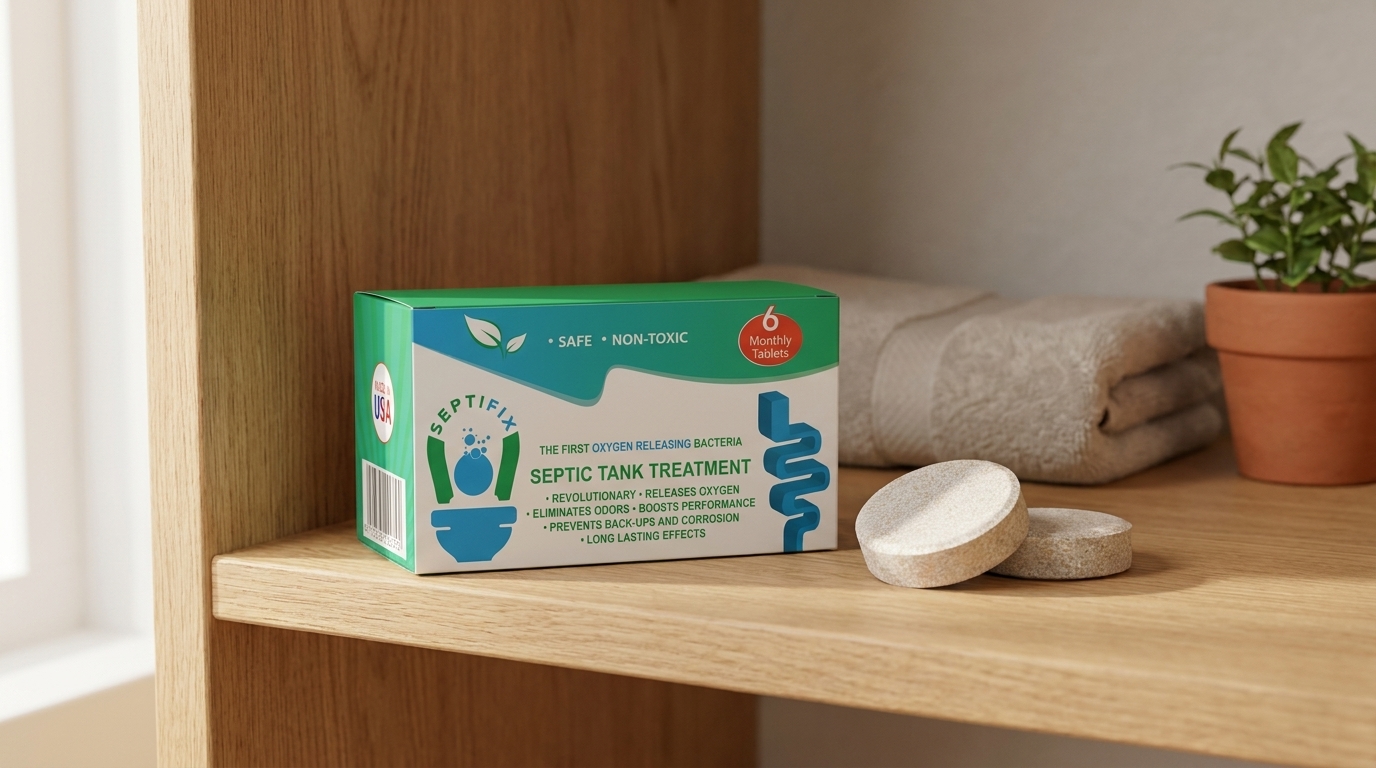
Of the products built around this idea, the one a lot of homeowners have been talking about lately is SeptiFix. The appeal is not complicated, and that is rather the point.
SeptiFix is a drop-in tablet you add to your system on a regular schedule. It is designed to support a healthy population of waste-digesting bacteria in the tank and help break down the waste, grease, and sludge that accumulate over time. No pouring, no measuring, no calling anyone out. You flush a tablet and let the system do what it is supposed to do.
What makes it attractive to the practical, do-it-yourself homeowner is the reason-why behind it: it targets the biological half of septic maintenance that pumping skips, and it does so in the simplest possible format. It is a routine you actually keep, because it takes less effort than remembering to change a furnace filter.
Drop-in simple
One tablet on a schedule. No tools, no mixing, no service call required.
Supports the system
Designed to support beneficial bacteria that break down waste, grease, and sludge.
Low-cost habit
A modest monthly cost compared with what a failed system can cost to repair.
How owners use it
Drop one in
Add a tablet to your system following the schedule printed on the label.
Let the bacteria work
The tablet is designed to support the bacteria that break down what flows in day to day.
Keep the routine
Repeat monthly. The point is consistency, the same way you would with any home-maintenance habit.
A tablet a month, or a repair you never planned for
This is where the math gets hard to ignore, and it is the same reason this approach has caught on.
Set the two costs side by side. On one side, an ongoing monthly maintenance habit that runs a modest amount. On the other, the kind of repair bill that arrives with no warning and no payment plan.
to $10 / month
to $15,000
Repair or replacement of a failed septic system typically costs $5,000 to $15,000; routine inspection and pumping runs about $250 to $500 every three to five years (U.S. EPA, 2023). Per-month figure based on the public SeptiFix pricing ladder.
To be clear, a maintenance tablet does not prevent repairs, and nobody can promise what any single system will or will not need. Soil, age, and usage all play a part. But the math is hard to ignore: under about $10 a month spent on a steady maintenance habit is a very different financial position than waiting and hoping the truck never brings a $5,000 to $15,000 surprise. It is the kind of low-cost habit worth sharing with anyone in the community who owns a septic system.
"But does it actually work?" The honest questions owners ask
If you are skeptical, good. A healthy dose of "that sounds too easy" is exactly the right instinct for any home product, and it is worth walking through the real questions out loud.
A note on reviews
We don't publish customer reviews we can't independently verify. Instead, here's what these tablets are designed to do, and what they can't do, so you can decide for yourself.
What they are designed to do: add beneficial bacteria and oxygen to the tank to support the natural breakdown of waste, grease, and sludge, as an easy monthly maintenance habit. What they can't do: guarantee a system never has trouble, reverse damage that has already happened, or replace pumping and professional inspection. They are a maintenance aid, not a cure.
The underlying idea is well established: septic tanks rely on bacteria to break down waste, and supporting that bacteria helps the system keep up. A tablet is simply a convenient way to do that on a schedule. It is a maintenance aid, not magic, and it works best as a consistent habit rather than a one-time rescue.
Pumping and bacterial support do two different jobs. Pumping removes what has already settled. A maintenance tablet is meant to support the breakdown of waste in between those visits. Many owners do both: keep pumping as recommended, and add the monthly step to support the system the rest of the year.
Fair question. No tablet can guarantee a system never has trouble, and no honest article should tell you otherwise. What it offers is a low-cost, low-effort way to support the biological side of septic maintenance that most routines skip. The reasonable expectation is help with ongoing maintenance and odor, not a miracle.
No. The entire appeal is that it is not. You drop a tablet in on the schedule printed on the label. There is nothing to mix, measure, or install.
That is what the guarantee is for. SeptiFix is sold through ClickBank, which backs purchases with a 60-day money-back guarantee, so you can try it and decide for yourself with your own purchase protected. Details are below.
Backed by a 60-Day Money-Back Guarantee
SeptiFix is sold through ClickBank, which provides a 60-day money-back guarantee on your purchase. If you are not satisfied within 60 days, you can request a refund through ClickBank's standard process. That makes trying it a low-risk decision: you get two full months to see how it fits your routine. Current guarantee terms are shown on the product's ClickBank checkout page.
The quiet shift more owners are making
None of this is about fear. It is about the difference between hoping a hidden system holds up and doing one small, sensible thing each month to help it.
That is really why more septic owners are folding a maintenance tablet into their routine. Not because it promises miracles, but because the trade is reasonable: a little ongoing effort and a modest cost, in exchange for supporting the part of the system that pumping leaves untouched, and a lot more peace of mind about the thing buried in the yard.
Picture the next time the pump truck rolls up your driveway. Not as the emergency call you dreaded, with a clipboard and a five-figure quote, but as a routine, scheduled visit you saw coming. You hand over a coffee, the work gets done, and the truck pulls away. Nothing about your week changes. That quiet, ordinary morning is the whole point.
If you own a septic system and the idea of a surprise repair bill has ever crossed your mind, it is worth a few minutes to see how the approach works for yourself.
The responsible-owner move
You take care of your home. This is one of the cheapest, simplest ways to take care of the system that quietly protects it.